
What is an LLM?
LLM stands for Large Language Model.
An LLM is an AI model trained on large amounts of text and other data to understand language, generate responses, explain concepts, write code, summarize documents, and perform reasoning tasks.
Examples of LLMs:
- GPT – OpenAI
- Claude – Anthropic
- Gemini – Google
- Llama – Meta
- DeepSeek – DeepSeek
1. How does an LLM work?
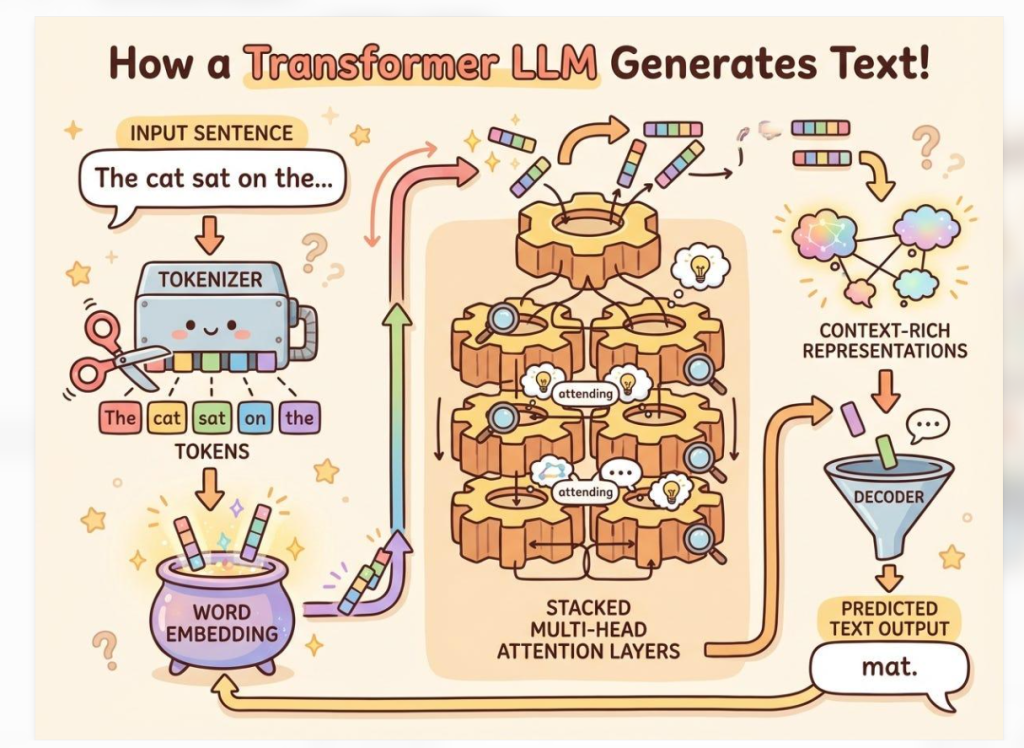
At a high level:
- You provide input (a question or prompt).
- The model processes the input as tokens.
- A neural network analyzes patterns and relationships in the input.
- The model predicts the next token.
- This process repeats until a response is generated.
For example:
Input:
“What is a Vector Database?”
LLM output:
“A vector database is a specialized database used to store and search numerical vector representations of data.”
LLMs don’t simply retrieve predefined answers; they generate responses based on learned patterns and the context provided.
2. LLM vs Embedding Model vs Vector Database
These three components are important in AI application development.
| Component | Purpose | Example |
|---|---|---|
| LLM | Generates answers and reasoning | GPT, Llama |
| Embedding Model | Converts data into numerical vectors | Nomic, OpenAI embeddings |
| Vector Database | Stores and searches vectors | pgvector, Qdrant |
3. How these components work together (RAG)
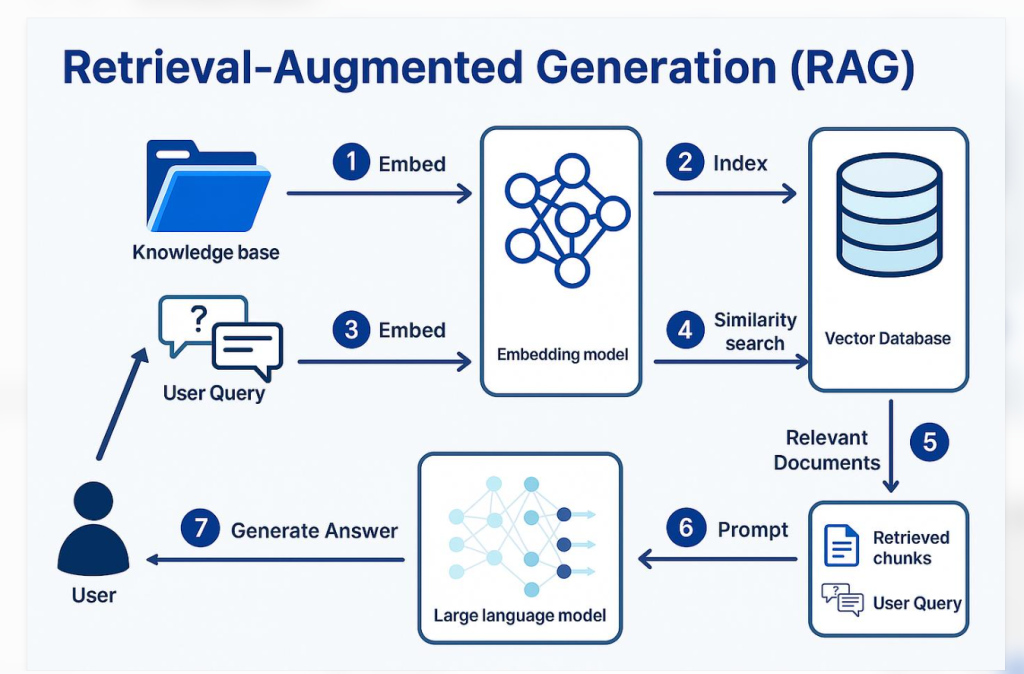
Imagine building a banking AI assistant using Backbase documentation.
     User Question
           |
           v
  Spring Boot Application
           |
           v
    Embedding Model
           |
           v
   Vector Database
           |
           v
 Relevant Documentation
           |
           v
          LLM
           |
           v
    Generated Answer
Example:
User asks:
“How does Backbase Dashboard Service configure tiles?”
The vector database retrieves relevant documentation, and the LLM uses that documentation to explain the answer.
This architecture is called RAG (Retrieval-Augmented Generation).
4. Can you run an LLM locally?
Yes. You can run open-source models on your Windows computer using Ollama.
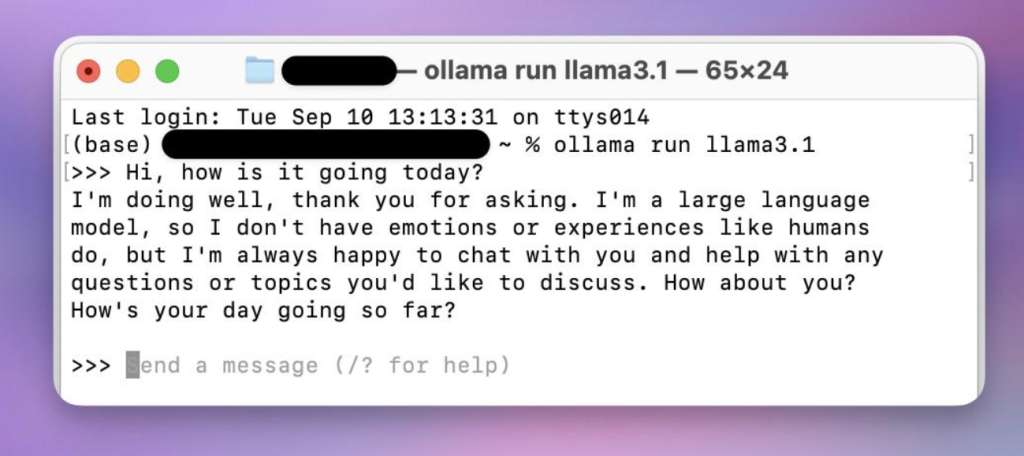
For example:
ollama pull llama3.2Run the model:
ollama run llama3.2You can interact with the model locally without sending your prompts to a hosted LLM API, provided your application is configured for local inference.
5. Complete AI Architecture
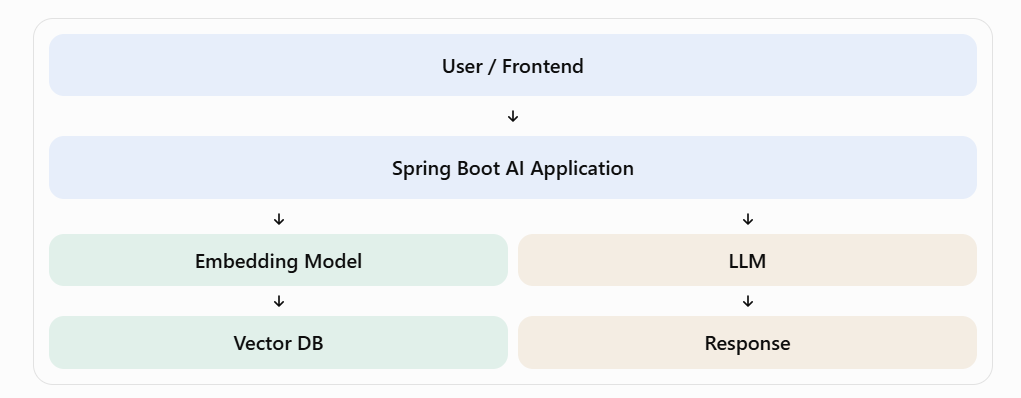
In simple terms:
- LLM = Brain that generates answers.
- Embedding Model = Converts meaning into numbers.
- Vector Database = Knowledge retrieval system.
- RAG = Technique that connects your knowledge to an LLM.